

 7-Aug-26 6 min. read
How Much Does Enclosed Car Transport Cost?
Compare current enclosed transport prices and understand why covered vehicle shipping costs more than standard open carrier service.
Read our cost guide Proudly American
Enclosed car transport cost usually ranges from about $1,000 to $2,500 for domestic vehicle shipping in 2026. A midsize sedan traveling roughly 630 miles averaged $1,183.80 in one national quote study. Longer routes or specialty vehicles can push the final price above $2,000, while oversized load transport for exceptionally large vehicles or equipment typically follows different pricing because of additional permits, specialized trailers, and handling requirements.
The broad rate for enclosed service is about $1.50 to $2.75 per mile. Short shipments tend to cost more per mile because scheduling and loading expenses remain similar regardless of distance.
A low estimate can increase when trailer space is scarce or the vehicle needs special handling. Comparing equivalent written quotes can prevent a price difference of several hundred dollars from appearing near pickup.
The enclosed car shipping cost for a standard sedan commonly falls between $1,050 and $1,700 for trips under 1,500 miles. A coast-to-coast shipment can approach $2,000 or more. Vehicle size and pickup timing can move the final amount outside these planning ranges.
Forbes Advisor collected enclosed quotes for a midsize sedan traveling about 630 miles. The lowest estimate was $1,050. The highest was $1,400.50. The average reached $1,183.80.
Cars.com reported an average enclosed price of $1,149 for a 500-mile shipment. Its 1,000-mile average reached $1,529. The reported 1,500-mile average was $1,669.
| Shipping distance | Average enclosed price | Average open price | Enclosed premium |
|---|---|---|---|
| 500 miles | $1,149 | $669 | $480 |
| 1,000 miles | $1,529 | $1,069 | $460 |
| 1,500 miles | $1,669 | $1,209 | $460 |
The table shows that covered service can add about $460 to $480 on these sample routes. The exact gap changes with carrier supply and vehicle dimensions.
One useful insight is that the total premium may remain similar across several distances. The price per mile still falls as the trip becomes longer because fixed loading work is spread across more highway miles.
Enclosed car shipping rates rise with total mileage while the rate for each mile usually falls. Forbes Advisor places the broad rate between $1.50 and $2.75 per mile. Longer shipments can fall below that range because dispatch and loading costs are spread across more distance.
A 630-mile enclosed shipment produced rates between $1.66 and $2.22 per mile in the Forbes study. The average cost was about $1.88 per mile.
Move.org reports that enclosed cross-country shipping can cost close to $2,000. Its 2026 figures came from an analysis of nearly 800 vehicle transport quotes.
The following ranges offer a practical starting point:
| Distance | Enclosed planning range | Typical use |
|---|---|---|
| Under 500 miles | $750 to $1,200 | Short regional movement |
| 500 to 1,000 miles | $1,050 to $1,550 | Medium-distance shipping |
| 1,000 to 1,500 miles | $1,400 to $1,750 | Long-distance movement |
| Cross-country | About $1,600 to $2,500 or more | Multi-day interstate shipping |
These figures combine reported 2026 averages with broader enclosed pricing. They are not guaranteed market prices. The actual route can produce a result above or below the range.
The covered car transport cost should be judged by total price rather than mileage alone. A short route can have a high mileage rate even when the final bill remains below a longer shipment.
Enclosed service costs more because the trailer carries fewer vehicles and uses specialized equipment. The covered structure also limits available capacity. Forbes Advisor found enclosed shipping averaged about 35% more than open transport in its comparison of five national vehicle shipping companies.
Open trailers can move more vehicles during one trip. The driver can divide fuel and operating expenses across a larger load.
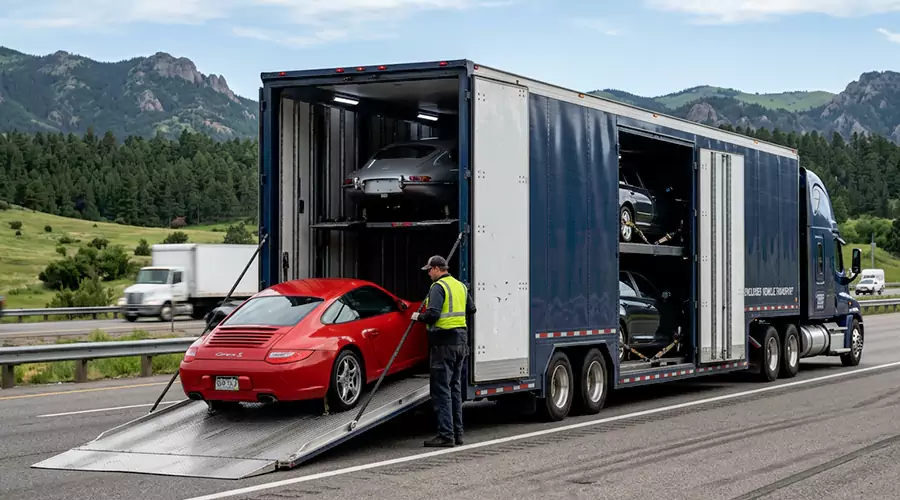
An enclosed auto transport trailer often carries two to six vehicles. Some specialty units carry only one car. Lower capacity means each customer pays a greater share of the trip.
Covered trailers may include hydraulic liftgates. They can also use soft tire straps or air-ride equipment. These features are useful for vehicles with low clearance or sensitive suspension parts.
Forbes reported an average enclosed price of $1,183.80 for its sample shipment. The average open price was $874.50. The covered option cost about $309 more for the same vehicle and route.
The price difference pays for more than protection from rain. It can also cover reduced trailer capacity and additional handling time.
The final quote increases when the vehicle is large or inoperable. Seasonal demand can also raise the price. Urgent pickup reduces the number of suitable carriers. Even the same vehicle on the same route can receive prices that differ by hundreds of dollars.
Large SUVs and pickup trucks take more space inside the trailer. Their weight can also limit the number of vehicles that fit within the legal load.
Cars.com reports that larger vehicles cost more because they use added carrier capacity. Modified tires or extended dimensions can increase the amount further.
An operable car can drive onto the trailer. An inoperable vehicle may need a winch or another loading method.
Move.org reports that an inoperable vehicle can add about $100 to $300 to a shipment. The actual increase depends on the equipment required.
A soft-sided trailer can cost less than a hard-sided unit. A single-car trailer usually costs more than a multi-car enclosed carrier.
Ask which trailer type supports the estimate. The phrase covered car transport can refer to different equipment designs.
Urgent pickup gives the dispatcher less time to find a suitable enclosed trailer. The reduced carrier pool can raise the final bid.
Booking ahead gives the shipment more chances to fit available capacity. Forbes advises comparing at least three estimates because rates can differ widely between companies.
Vehicle shipping prices often rise between spring and fall. Forbes identifies these months as peak demand periods.
Winter is not always cheaper. Severe weather can reduce available carrier capacity along some routes.
You can test an enclosed quote by calculating the price per mile and comparing it with current 2026 benchmarks. Divide the total estimate by the highway distance. A result between $1.50 and $2.75 per mile fits the broad range reported by Forbes Advisor.
Use this five-step diagnostic:
A $1,500 quote for 1,000 miles equals $1.50 per mile. That figure sits at the lower end of the broad enclosed range. It also sits close to the $1,529 average reported by Cars.com.
A $1,500 quote for 500 miles equals $3 per mile. That number is higher than the broad benchmark. However, shorter shipments often carry a higher mileage rate.
Your test should compare identical services. A hard-sided single-car shipment cannot be measured against a soft-sided multi-car estimate.
Review enclosed car shipping quotes for the complete amount. The broker deposit and carrier balance should both appear in writing.
A risky quote may sit far below the other estimates or omit the assigned carrier. Missing federal registration is another warning sign. FMCSA requires interstate auto brokers and carriers to register. Both receive an MC number while interstate carriers also receive a USDOT number.
Check these ten warning signs:
The enclosed car shipping companies you compare should provide consistent written details. A polished website cannot replace federal verification.
Contact a professional transporter when the vehicle has very low clearance or cannot move under its own power. Specialist guidance also helps with unusual dimensions. The transporter should confirm trailer fit and loading equipment. It should also explain cargo coverage before the vehicle is released.
Ask for equipment review when the car has a long front overhang. A steep loading ramp can contact a front splitter.
Report locked wheels before booking. This condition may require different equipment than a failed battery.
Compare enclosed car transport companies by carrier authority and trailer specifications. Customer reviews can provide context but federal registration should guide the first screening step.
Claims about the best enclosed car transport companies should not replace document checks. Confirm the MC number through FMCSA.
Ask the assigned carrier for proof of cargo insurance. Check the policy dates and coverage limit.
The best enclosed auto transport option is the one that fits the vehicle and route. It is not always the most expensive quote.
You can lower the enclosed shipping price by booking early and choosing flexible pickup dates. Accurate vehicle dimensions also prevent loading changes. Compare equivalent trailer types. Read the payment schedule before dispatch because unclear deposits or card fees can increase the final cost.
Use this preparation schedule:
Measure the lowest point beneath the front bumper. Share that number when requesting covered car shipping.
Remove detachable roof accessories when the manufacturer permits it. Added height can change trailer placement.
Avoid urgent pickup when your schedule allows flexibility. More lead time gives the dispatcher a larger pool of carriers.
Do not select a single-car trailer unless the vehicle requires private space. Multi-car enclosed shipping can provide covered protection at a lower price.
Check the total balance rather than the deposit alone. A small booking payment does not prove that the complete shipment is affordable.
Enclosed car transport cost usually falls between $1,000 and $2,500 in 2026. Distance and trailer design shape the final price. Vehicle size can raise it further. Compare at least three written estimates and confirm federal registration before booking. Professional input is useful when loading clearance or vehicle condition creates uncertainty. This week, calculate the price per mile for every quote you receive.
7-Aug-26 6 min. read
Compare current enclosed transport prices and understand why covered vehicle shipping costs more than standard open carrier service.
Read our cost guideNeed Help?
One call solves it all.